South Africa vs Canada: Match Preview, Predictions and Betting Tips
Published on Friday, 26 June 2026 by Steve


South Africa vs Canada - 2026 FIFA World Cup Round of 32
2026 FIFA World Cup Prediction & Betting Tips
Match Overview
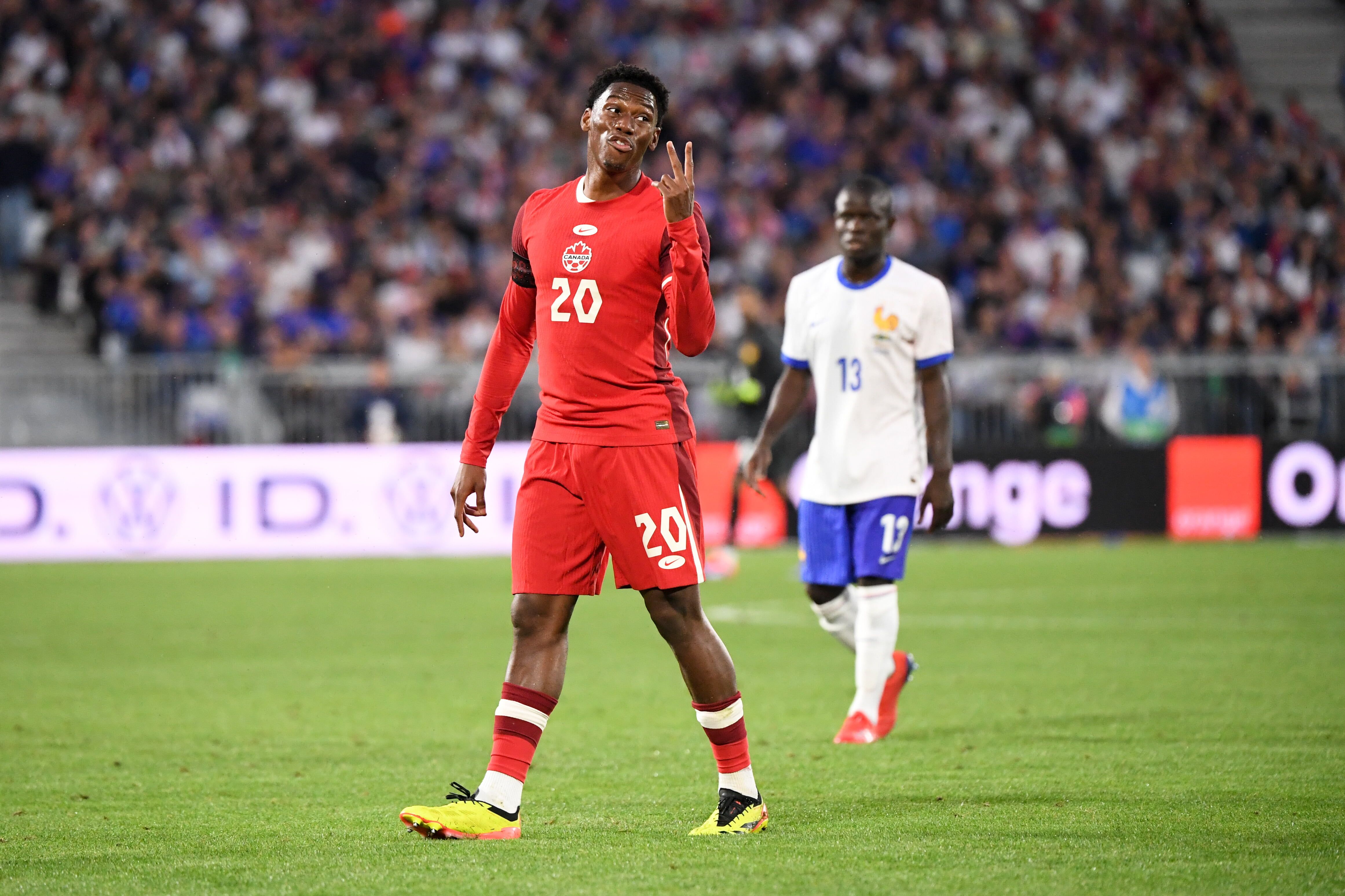
Copa América Stars: Jonathan David (Canada)
The 2026 FIFA World Cup has delivered its first major knockout round shock pairing as South Africa's Bafana Bafana collide with Canada's Les Rouges in a historic Round of 32 encounter at SoFi Stadium in Inglewood, California. This represents uncharted territory for both nations, with South Africa appearing in their fourth World Cup finals and Canada competing in only their third tournament, yet both sides have defied expectations to reach this stage. For South Africa, the journey has been one of resilience and tactical discipline under veteran Belgian coach Hugo Broos, who has guided a squad dominated by domestic-based talent through a challenging Group A that featured hosts Mexico, Czechia, and South Korea. Canada, co-hosting the tournament alongside the United States and Mexico, have ridden a wave of home support and Jesse Marsch's revolutionary "Maplepress" system to finish second in Group B behind Switzerland, securing their first-ever World Cup knockout stage appearance in the process.
This fixture carries enormous significance for the footballing histories of both nations. South Africa have never progressed beyond the group stage in their three previous World Cup appearances, having debuted in 1998, returned in 2002, and hosted the tournament in 2010. Each time, they exited at the first hurdle, leaving a lingering sense of what might have been for a nation with rich footballing traditions and passionate support. Canada, meanwhile, endured a disastrous 2022 World Cup where they lost all three matches, and their 1986 debut ended similarly without a single point. The 2026 tournament on home soil was viewed as a redemption arc, but even the most optimistic Canadian supporters did not anticipate a knockout stage berth. The winner of this match will advance to face either Argentina or Denmark in the Round of 16, presenting an opportunity for either nation to write their most glorious footballing chapter yet.
From a betting perspective, this match presents a fascinating puzzle. The European odds markets have struggled to separate these two teams, with bookmakers acknowledging the genuine parity that exists between them. South Africa's defensive organisation, which has been the hallmark of their tournament campaign, meets Canada's high-energy pressing system that has overwhelmed opponents with its intensity. The tactical clash between Broos's structured, compact approach and Marsch's aggressive, vertical transitions creates a scenario where neither side is likely to dominate possession for extended periods. Both teams have shown vulnerabilities in front of goal during the group stage, with South Africa scoring just two goals in their three matches and Canada managing eight but heavily reliant on one performance against Qatar. This convergence of defensive solidity and attacking inconsistency points toward a tightly contested affair where clear-cut chances may be at a premium.
Tactical Preview

Canada's Stephen Eustaquio finds purpose in Copa America after losing his parents: 'What am I here for?' - The Athletic
Formation & Key Matchups
South Africa 4-3-3
Hugo Broos has demonstrated tactical flexibility throughout the tournament, initially deploying a cautious five-man defensive system against Mexico before transitioning to a more balanced 4-3-3 formation for the crucial must-win encounters against Czechia and South Korea. The Belgian coach's philosophy centres on defensive organisation and disciplined positional play, with his team comfortable surrendering possession in favour of maintaining structural integrity. Against Canada, Broos is expected to revert to a compact 4-3-3 with a deep defensive block, knowing that Marsch's side will dominate the ball and look to force turnovers high up the pitch. The key for South Africa will be their ability to bypass Canada's aggressive press through quick, vertical passes to their pacy wide forwards. The midfield trio of Teboho Mokoena, Thalente Mbatha, and Jayden Adams will need to display exceptional composure under pressure, as Canada's double pivot of Stephen Eustàquio and Mathieu Choinière will look to suffocate central passing lanes. The battle between South Africa's full-backs, particularly Khuliso Mudau and Aubrey Modiba, against Canada's wingers will be decisive, as Broos's system relies heavily on disciplined wing defence to prevent overloads.
Canada 4-4-2 (Maplepress)
Jesse Marsch has transformed Canadian football with his high-octane, aggressive pressing system that has become known as the "Maplepress." Drawing heavily from his Red Bull football philosophy developed at RB Salzburg, RB Leipzig, and Leeds United, Marsch demands relentless counter-pressing, immediate vertical transitions, and a defensive line pushed high up the pitch. Canada's 4-4-2 formation is designed to facilitate central overloads and intense pressure on the opposition's defensive third, with the goal of winning possession in dangerous areas and creating scoring chances before the opponent can reorganise. The system places enormous physical demands on players, requiring elite stamina and work rates, but it has proven effective against teams uncomfortable playing under sustained pressure. Against South Africa, Marsch will expect his side to dominate territory and force Bafana Bafana into hurried clearances and defensive errors. However, the Canadian coach must also be mindful of tournament fatigue, as his physically demanding system can leave players drained over the course of a month-long competition. The absence of captain Alphonso Davies, who remains sidelined with injury, removes a crucial outlet on the left flank, meaning Jacob Shaffelburg or Ali Ahmed will need to step up to provide width and penetration.
Critical Vulnerability
The critical vulnerability for both sides lies in their attacking inefficiency when facing organised defensive blocks. South Africa have struggled to create high-quality chances against teams that sit deep and deny space in behind, with their forwards often isolated and service cut off. Lyle Foster, leading the line for Bafana Bafana, has shown flashes of quality but has been starved of consistent supply in the final third. Canada's challenge is different but equally concerning; their high-press system can leave them exposed to quick counter-attacks if the initial press is bypassed. Against South Africa, who will likely defend deep and look to spring rapid transitions, Canada must be disciplined in their rest defence to prevent the pacy South African forwards from exploiting the space behind their advanced full-backs. The team that can solve their attacking puzzle first will likely prevail, but the evidence from the group stage suggests both coaches are still searching for the right formula.
Team News & Squad Status
South Africa 📉
- Ronwen Williams (GK) - Captain and undisputed first choice, instrumental in the group stage with crucial saves against Mexico and South Korea
- Lyle Foster (FW) - Burnley striker leading the line, yet to find his scoring touch at the tournament but remains the primary goal threat
- Teboho Mokoena (MF) - Mamelodi Sundowns midfielder, the creative heartbeat of the team with exceptional passing range and defensive coverage
- Aubrey Modiba (DF) - Recovered from a knock sustained in the opener and expected to start at left-back, providing crucial defensive stability and overlapping runs
- Sphephelo Sithole (MF) - Available after suspension, adds steel and physicality to the midfield base
- Themba Zwane (MF) - Also returning from suspension, brings experience and composure in possession
- Olwethu Makhanya (DF) - Philadelphia Union centre-back, one of two debutants in the squad who could feature if Broos needs defensive reinforcements
- Bradley Cross (DF) - Kaizer Chiefs left-back option, providing cover for Modiba
- Ime Okon (DF) - Hannover 96 defender, offering European experience and aerial dominance
- Thapelo Maseko (FW) - AEL Limassol winger, the team's most direct outlet with pace to stretch defences
Canada 📈
- Alphonso Davies (DF) - Captain remains OUT with injury, a massive blow to Canada's attacking width and defensive solidity on the left flank
- Jonathan David (FW) - Lille striker, the tournament's joint-top scorer after a hat-trick against Qatar, but quiet in the other two matches
- Stephen Eustàquio (MF) - Porto midfielder, the metronome of the Maplepress, crucial for transitioning from defence to attack
- Moïse Bombito (DF) - Working his way back from a serious leg injury, status uncertain but could provide a significant defensive boost if fit
- Luc de Fougerolles (DF) - 20-year-old defender who has impressed when called upon, likely to start if Bombito remains unavailable
- Cyle Larin (FW) - Veteran striker who scored Canada's first-ever home World Cup goal against Bosnia, provides aerial threat and hold-up play
- Jayden Nelson (FW) - Called up as injury replacement for Marcelo Flores, offers fresh legs and direct running from the bench
- Maxime Crépeau (GK) - Experienced goalkeeper who has been solid between the posts, though not heavily tested in the group stage
- Derek Cornelius (DF) - Physical centre-back who will need to be at his best to contain South Africa's pacey forwards
- Alistair Johnston (DF) - Celtic right-back, crucial for providing width on the right and supporting the press
Predicted Lineups

Lyle Foster: Burnley reveal South Africa forward receiving care over mental health issues | Football News | Sky Sports
| South Africa 4-3-3 | Canada 4-4-2 |
|---|---|
| Ronwen Williams (GK) | Maxime Crépeau (GK) |
| Khuliso Mudau (RB) | Alistair Johnston (RB) |
| Ime Okon (CB) | Derek Cornelius (CB) |
| Nkosinathi Sibisi (CB) | Luc de Fougerolles (CB) |
| Aubrey Modiba (LB) | Samuel Adekugbe (LB) |
| Jayden Adams (DM) | Stephen Eustàquio (CM) |
| Teboho Mokoena (CM) | Mathieu Choinière (CM) |
| Thalente Mbatha (CM) | Jacob Shaffelburg (RM) |
| Thapelo Maseko (RW) | Tajon Buchanan (LM) |
| Lyle Foster (ST) | Jonathan David (ST) |
| Oswin Appollis (LW) | Cyle Larin (ST) |
Head-to-Head Record
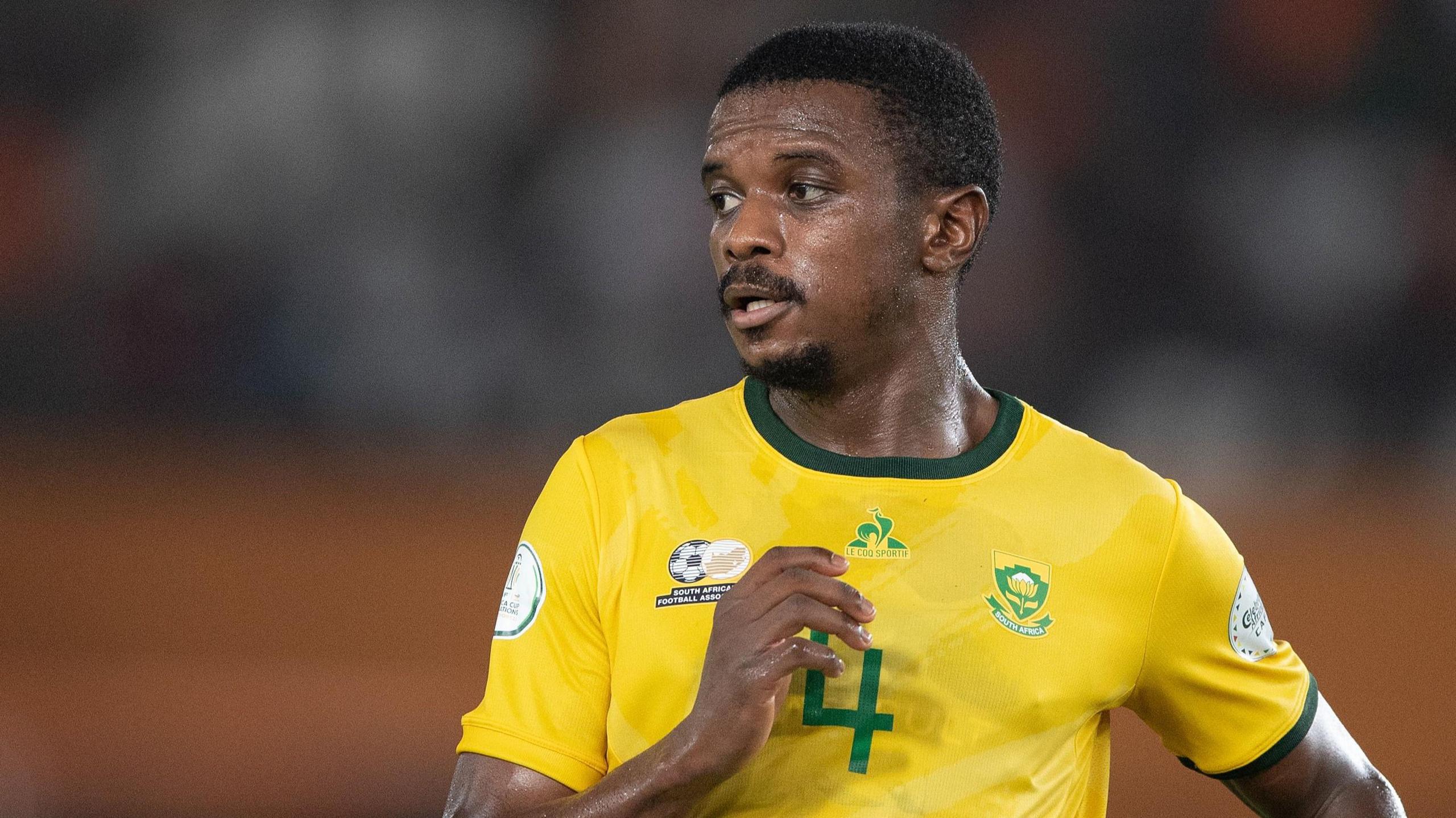
World Cup 2026 qualifying: South Africa sweat over potential sanction - BBC Sport
The head-to-head history between South Africa and Canada is remarkably sparse, with only one previous meeting on record, which took place in a friendly international on November 20, 2007. On that occasion, South Africa emerged victorious with a 2-0 win, providing the only historical data point for this fixture. While that result offers a psychological edge to Bafana Bafana, it holds little predictive value given the nearly two-decade gap and the wholesale transformation both national teams have undergone since then. The 2007 match was played in a different era of football, with different coaching philosophies, player generations, and tactical approaches that bear no resemblance to the modern identities of these two sides.
Given the lack of meaningful historical data, bettors and analysts must rely on current form, tactical matchups, and tournament performance to assess this fixture. South Africa's group stage campaign demonstrated their ability to grind out results against technically superior opponents, while Canada's roller-coaster journey showcased both their explosive potential and their vulnerability against organised defences. The psychological factor of knockout football cannot be underestimated; for both nations, this represents the biggest match in their modern footballing history, and the pressure of the occasion may lead to a cagey, risk-averse approach from both coaches. The draw prediction markets have seen significant interest in the build-up to this match, reflecting the widespread expectation that this will be a tight, tactical battle rather than an open, goal-laden spectacle.
Key Players Comparison
The Lille forward has been Canada's brightest star, netting a historic hat-trick against Qatar that made him the first player to score a World Cup hat-trick for a host nation since 1966. However, his performances against Bosnia and Switzerland were subdued, raising questions about his consistency against organised defences. David's movement off the ball and ability to find space in the box make him Canada's most dangerous weapon, but he will need better service against South Africa's compact block.
The Burnley striker has carried the weight of South Africa's attacking expectations throughout the tournament, but has found chances few and far between. Foster's hold-up play and aerial ability are crucial for South Africa's counter-attacking strategy, as he can bring others into play and relieve pressure on the defence. Against Canada, he will need to be clinical with the limited opportunities that come his way, as Marsch's side will look to dominate possession and territory.
The Porto midfielder is the beating heart of the Maplepress, dictating the tempo of Canada's play and providing the link between defence and attack. His ability to win second balls and quickly transition possession forward is essential to Marsch's system. Eustàquio's defensive work rate also allows Canada's full-backs to push high, creating the overloads that define their attacking approach. If South Africa can neutralise his influence, they will significantly disrupt Canada's rhythm.
The Mamelodi Sundowns midfielder has been South Africa's standout performer, averaging a rating of 7.53 in domestic league play and carrying that form into the World Cup. Mokoena's passing range and ability to operate under pressure make him the key to South Africa's transition play. If he can find pockets of space between Canada's aggressive midfield lines, he has the vision to unlock the Canadian defence with incisive through balls to the pacy wide forwards.
The individual battles across the pitch will be fascinating to watch. Canada's strength lies in their collective pressing and transition speed, while South Africa's hope rests on the shoulders of a few key individuals who can produce moments of magic. For bettors looking at correct score tips, the low-scoring nature of this fixture makes it an attractive proposition for defensive markets and under goals. The both teams to score market also offers value, as both sides have shown defensive vulnerabilities in the group stage, though South Africa's improved organisation in their latter matches suggests a clean sheet is not out of the question.
The Managers
Hugo Broos (South Africa)
The 74-year-old Belgian tactician has announced that the 2026 World Cup will be his swansong, bringing a decorated career in international management to a close. Broos, who helped Belgium to fourth place as a player at the 1986 World Cup in Mexico, has instilled a sense of discipline and organisation in Bafana Bafana that was sorely lacking before his arrival. His approach has not been without criticism; the conservative nature of his tactics has frustrated fans who crave more attacking ambition, and his tendency to experiment with formations in high-stakes matches has raised eyebrows. However, his record speaks for itself, with a 48% win rate across 71 matches and a team that punches above its weight against more fancied opponents.
Broos's greatest strength is his ability to forge a cohesive unit from a squad that lacks the star power of many of their rivals. With 19 of his 26 players based in the South African domestic league, he has built a team that understands his tactical demands and trusts the system. Against Canada, Broos will likely revert to the pragmatic approach that served him well against Mexico and South Korea, prioritising defensive solidity over attacking flair. His experience in knockout football, gained from years of managing in Europe and Africa, could prove decisive in a match where the margins are likely to be razor-thin. The Belgian's ability to motivate his players and keep them focused under pressure has been evident throughout the tournament, and he will need every ounce of his managerial acumen to guide Bafana Bafana to a historic victory.
Jesse Marsch (Canada)
The American coach has been a revelation since taking over the Canadian national team in May 2024, transforming a side that struggled for identity under previous management into one of the most tactically distinct teams at the World Cup. Marsch's "Maplepress" system, a high-energy, aggressive pressing approach derived from his Red Bull football philosophy, has given Canada a clear identity and a method of play that can trouble even the most technically gifted opponents. His time at RB Salzburg, RB Leipzig, and Leeds United provided the perfect apprenticeship for implementing this demanding style at international level, and the results have been impressive, with Canada losing just one of their 16 matches since the start of 2025.
Marsch's greatest challenge in this match will be managing the physical and mental toll of a month-long tournament on a squad that plays such an intense style. The high press requires elite stamina and concentration, and there are signs that some Canadian players are beginning to show fatigue. The absence of Alphonso Davies removes a crucial outlet and defensive shield, forcing Marsch to adjust his system without compromising its core principles. His ability to motivate and inspire has never been in question, but his tactical flexibility will be tested by Broos's conservative approach. If Canada cannot force South Africa into errors high up the pitch, they may struggle to break down a deep, organised defensive block. Marsch's willingness to adapt his approach, perhaps by incorporating more possession-based phases, could be the key to unlocking the South African defence.
Betting Predictions & Tips
Odds: 1.65
This is the standout bet for this fixture. Both teams have demonstrated a preference for defensive organisation over attacking risk in the tournament, and the knockout stage pressure will only amplify this tendency. South Africa's group stage matches produced just five goals in total, while Canada's matches against Bosnia and Switzerland were tight, low-scoring affairs. The tactical matchup points to a cagey game with few clear-cut chances, making the over-under prediction of under 2.5 goals a compelling selection. The European odds of 1.65 represent solid value for a bet that aligns with the historical patterns of both teams and the high-stakes nature of knockout football.
Odds: 3.20
The draw offers exceptional value in this fixture, with both teams evenly matched and likely to adopt cautious approaches. South Africa's defensive resilience under Broos has been proven against stronger opponents, while Canada's attacking struggles against organised defences were evident in their group stage matches. The psychological weight of the occasion, with both nations facing their biggest ever knockout match, suggests a risk-averse approach from both coaches. The draw prediction market has been popular among informed bettors, and the 3.20 odds provide an attractive risk-reward ratio. For those seeking draw no bet predictions, this match offers a perfect scenario for hedging strategies.
Odds: 7.50
Our primary prediction for this match is a 0-0 draw after 90 minutes. The convergence of South Africa's defensive discipline and Canada's attacking inefficiency against deep blocks creates a perfect storm for a goalless stalemate. Both teams have shown a propensity for low-scoring matches in the tournament, and the knockout stage pressure will further suppress attacking ambition. The correct score tips market offers generous odds for this outcome, and it aligns with the tactical profiles of both teams. For those looking at double chance prediction markets, combining South Africa win or draw provides a safety net, though the value lies in the draw itself.
Odds: 1.85
The both teams to score market offers a compelling option for the "No" selection. South Africa's defensive organisation has been the bedrock of their tournament campaign, and they have kept clean sheets in two of their three group matches. Canada, while scoring eight goals in the group stage, were heavily reliant on one match against Qatar and struggled to create chances against Bosnia and Switzerland. The tactical matchup favours a low-scoring game where one or both teams fail to find the net, making the BTTS "No" bet at 1.85 an attractive proposition for cautious bettors.
Odds: 11.00
For those seeking a speculative longshot, the prospect of South Africa prevailing on penalties after a 0-0 draw offers tantalising odds. Ronwen Williams, the Bafana Bafana captain and goalkeeper, has a reputation for saving penalties and could be the hero in a shootout scenario. South Africa's mental toughness and collective spirit, forged through years of adversity, could give them the edge in a pressure-cooker penalty shootout. The hot predictions markets have seen some interest in this outcome, and while it is undoubtedly a high-risk bet, the potential returns justify a small stake for adventurous punters. The sure win predictions may be harder to come by in this evenly matched fixture, but the value in speculative markets is undeniable.
📊 Final Score Prediction
Match Analysis
Our prediction of a 0-0 draw is rooted in a comprehensive analysis of both teams' tactical profiles, tournament form, and the psychological pressures of knockout football. South Africa under Hugo Broos have demonstrated an exceptional ability to frustrate opponents and maintain defensive discipline, conceding just three goals in their three group matches despite facing the tournament hosts Mexico. Their compact 4-3-3 system, which can morph into a 4-5-1 without the ball, is designed to deny space in central areas and force opponents into wide positions where crosses can be dealt with by their aerially dominant centre-backs. Against Canada, who will look to dominate possession and press high, this approach is perfectly suited to neutralising the Maplepress.
Canada's attacking struggles against organised defences have been the one blemish on an otherwise impressive tournament campaign. While they routed Qatar 6-0, that performance was an outlier against a disorganised opponent. Against Bosnia and Switzerland, Canada managed just two goals in 180 minutes of football, and both of those came from set pieces or individual moments rather than sustained attacking pressure. The absence of Alphonso Davies removes their primary creative outlet and means they lack the width to stretch South Africa's compact defensive block. Jonathan David, while lethal in space, has shown he can be neutralised by physical, disciplined defenders who deny him room to run in behind. With South Africa likely to defend deep and invite pressure, Canada's high-press system may win them territory but not necessarily chances, leading to a frustrating afternoon for the co-hosts. The match is likely to be decided by a single moment of brilliance or a defensive error, but our analysis suggests neither side will find the breakthrough in 90 minutes, making the draw the most probable outcome.
Key Insights & Statistics
- Tournament Form: South Africa have won 1, drawn 1, and lost 1 in their group stage campaign, scoring 2 goals and conceding 3. Canada have won 1, drawn 1, and lost 1, scoring 8 goals but conceding 3, with 6 of those goals coming in one match against Qatar.
- Defensive Records: South Africa kept clean sheets against Nicaragua (friendly) and South Korea (World Cup), demonstrating their ability to shut out opponents when properly organised. Canada kept no clean sheets in the group stage, conceding in all three matches.
- Head-to-Head: The only previous meeting between these nations ended in a 2-0 victory for South Africa in a 2007 friendly, though this holds minimal predictive value given the time elapsed.
- Key Player Availability: South Africa welcome back Sphephelo Sithole and Themba Zwane from suspension, significantly strengthening their midfield options. Canada remain without captain Alphonso Davies, while Moïse Bombito's fitness remains uncertain.
- Tactical Matchup: South Africa's deep defensive block and counter-attacking approach directly counters Canada's high-press, possession-dominant style. The team that can impose their game plan is likely to prevail, but historical evidence suggests South Africa's approach is more suited to knockout football.
- Physical Condition: Canada's high-intensity pressing system places enormous physical demands on players, and there are signs of fatigue in the squad. South Africa's more conservative approach has allowed them to conserve energy, potentially giving them an advantage in the latter stages of the match.
- Psychological Factor: Both teams are playing in the biggest match in their modern footballing history. The pressure of the occasion may lead to a cagey, error-strewn contest where neither side is willing to take risks.
- Managerial Experience: Hugo Broos's vast international experience, including AFCON success and multiple World Cup campaigns, contrasts with Jesse Marsch's relative newcomer status at the international level, though Marsch's club pedigree is impressive.
- Goalscoring Trends: South Africa have failed to score in 7 of their last 11 matches across all competitions, highlighting their attacking struggles. Canada have scored in 15 of their last 16 matches, but their goalscoring has been heavily reliant on Jonathan David and Cyle Larin.
- Knockout History: Neither nation has ever won a World Cup knockout match, adding to the historical significance of this fixture for both footballing cultures.
Conclusion
The South Africa vs Canada Round of 32 clash at the 2026 FIFA World Cup represents a genuine crossroads moment for both nations' footballing histories. For South Africa, a victory would validate Hugo Broos's conservative but effective approach and secure a place in the Round of 16 against one of the tournament's elite, a feat that would surpass anything achieved by Bafana Bafana in their previous World Cup appearances. The Belgian coach's swansong could yet have a glorious final chapter, built on the foundations of defensive discipline, collective spirit, and the belief that a team can achieve more than the sum of its parts. For Canada, the co-hosts who have captured the imagination of a nation, this match offers the chance to prove that their group stage success was no fluke and that Jesse Marsch's Maplepress system can thrive in the pressure-cooker environment of knockout football.
From a betting perspective, the prediction football today markets have identified this as one of the most difficult matches to call at the World Cup, with the European odds reflecting genuine uncertainty. Our analysis points decisively toward a low-scoring, tightly contested affair, with the most probable outcome being a 0-0 draw after 90 minutes. The draw prediction at 3.20 offers excellent value, while the under 2.5 goals market at 1.65 provides a safer alternative for risk-averse bettors. The correct score tips of 0-0 at 7.50 represent the pinnacle of value for those who share our tactical assessment. For those seeking hot predictions or sure win predictions, this fixture demands caution and a recognition that the margins between success and failure are razor-thin.
Ultimately, this match will be decided by which team can impose their tactical identity on the other. If Canada can force South Africa into errors high up the pitch and create early chances, their superior athleticism and transition speed could overwhelm Bafana Bafana. Conversely, if South Africa can withstand the initial Canadian barrage and drag the match into a physical, attritional contest, their defensive organisation and experience could see them through to a historic victory. Whatever the outcome, this fixture promises to be a compelling chapter in World Cup history, a meeting of two footballing cultures on the rise, each desperate to take the next step on the global stage. For bettors, the key is to approach this match with patience, discipline, and a clear understanding of the tactical dynamics at play, using the insights and World Cup 2026 betting tips available to make informed decisions in what is sure to be an unforgettable encounter.