Scotland vs Morocco: Match Preview, Predictions and Betting Tips
Published on Thursday, 18 June 2026 by Steve


Scotland vs Morocco - FIFA World Cup 2026 Group C
World - World Championship 2026 Prediction & Betting Tips
Match Overview
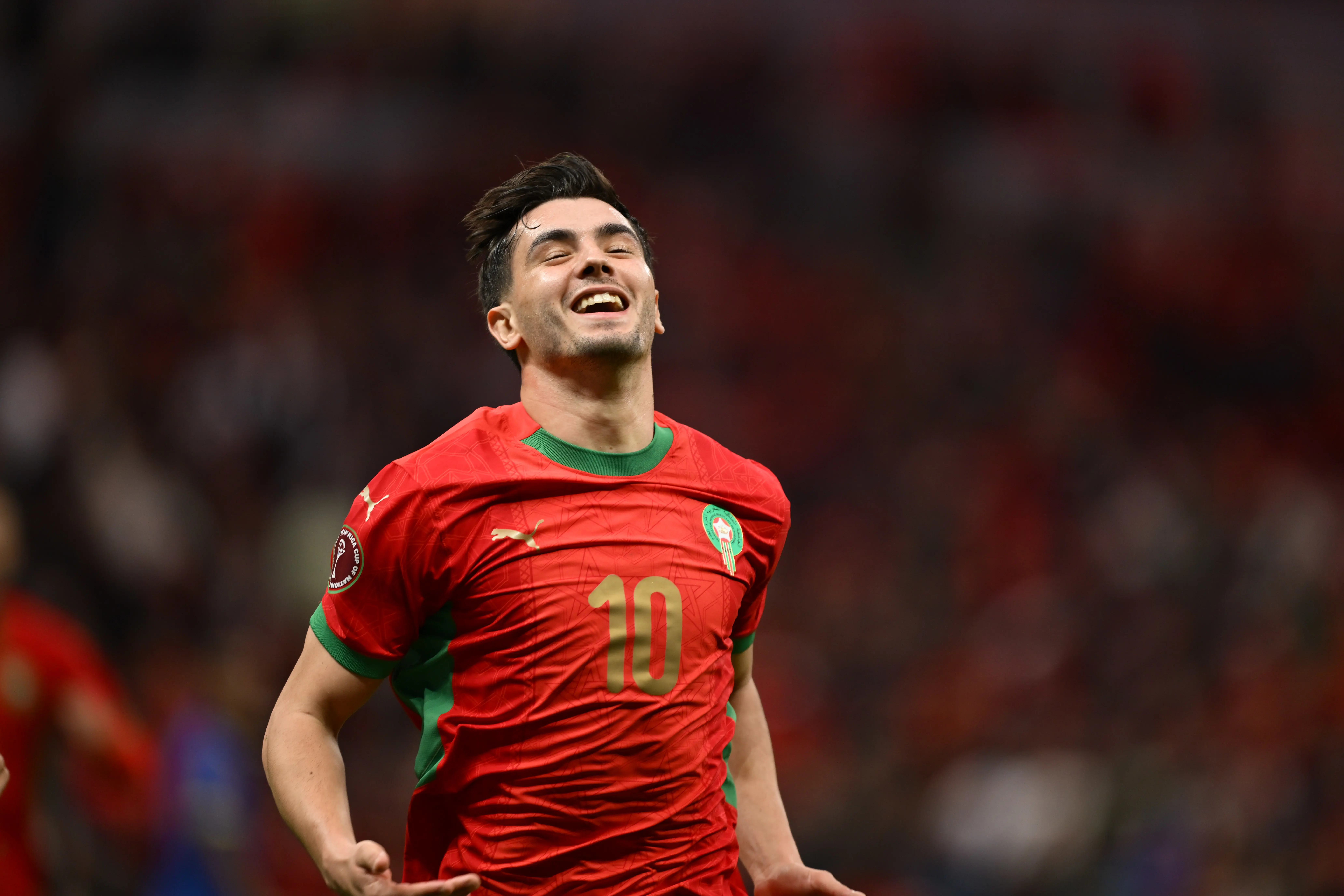
Brahim Díaz wins TotalEnergies CAF AFCON 2025 Puma Golden Boot
Scotland's long-awaited return to the FIFA World Cup finals reaches a critical juncture on Friday, June 19, 2026, when Steve Clarke's Tartan Army face the formidable Atlas Lions of Morocco at Gillette Stadium in Foxborough, Massachusetts. This Group C encounter represents far more than a routine group stage fixture; it is a collision of footballing cultures, tactical ideologies, and national dreams that have been decades in the making. For Scotland, this marks their first World Cup appearance since France 1998, ending a 28-year exile from football's grandest stage. The emotional weight of that qualification journey, sealed by a dramatic 4-2 victory over Denmark at Hampden Park featuring Scott McTominay's iconic overhead kick and Kenny McLean's last-gasp clincher from the halfway line, still reverberates through every corner of Scottish football. The Tartan Army have crossed the Atlantic in their thousands, transforming Foxborough into a temporary home away from home, and they will expect nothing less than total commitment from a squad that has captured the imagination of a nation.
Morocco arrive in North America carrying the burden of expectation rather than the freedom of the underdog. Their historic fourth-place finish at Qatar 2022 fundamentally altered global perceptions of African football, and under new head coach Mohamed Ouahbi, the Atlas Lions have evolved from a defensive counter-attacking unit into a possession-dominant force that controlled their CAF qualification group with ruthless efficiency. Eight wins from eight matches, 22 goals scored and only two conceded, represents a statement of intent that few nations can match. Currently ranked 8th in the FIFA World Rankings, Morocco are no longer a surprise package but a genuine heavyweight on the international stage. The presence of elite European club stars such as Achraf Hakimi at Paris Saint-Germain, Brahim Díaz at Real Madrid, and Noussair Mazraoui at Manchester United underscores the quality that Scotland must contend with. This fixture at Gillette Stadium, with its capacity of 65,878, promises to be a cauldron of intensity where Scotland's organised resilience meets Morocco's technical brilliance.
The stakes could hardly be higher for both nations. Scotland opened their campaign against Haiti on June 13, and the result of that fixture will inevitably shape Clarke's approach to this second group game. A positive result against Morocco would thrust Scotland firmly into contention for a place in the knockout rounds, potentially as one of the best third-placed teams if not through the top two automatic positions. For Morocco, fresh from their opening match against Brazil on June 14, this represents an opportunity to consolidate their position and demonstrate that the Qatar 2022 magic was no fluke. The tactical battle between Clarke's pragmatic 3-5-2 system and Ouahbi's possession-based 4-3-3 will be fascinating to observe, particularly in the midfield area where Scotland's industrious trio of John McGinn, Scott McTominay, and Lewis Ferguson must find a way to disrupt the creative rhythm of Azzedine Ounahi, Bilal El Khannouss, and Sofyan Amrabat. With both teams possessing genuine match-winners and clear tactical identities, this encounter has all the ingredients to become one of the defining matches of the 2026 World Cup group stage.
Tactical Preview
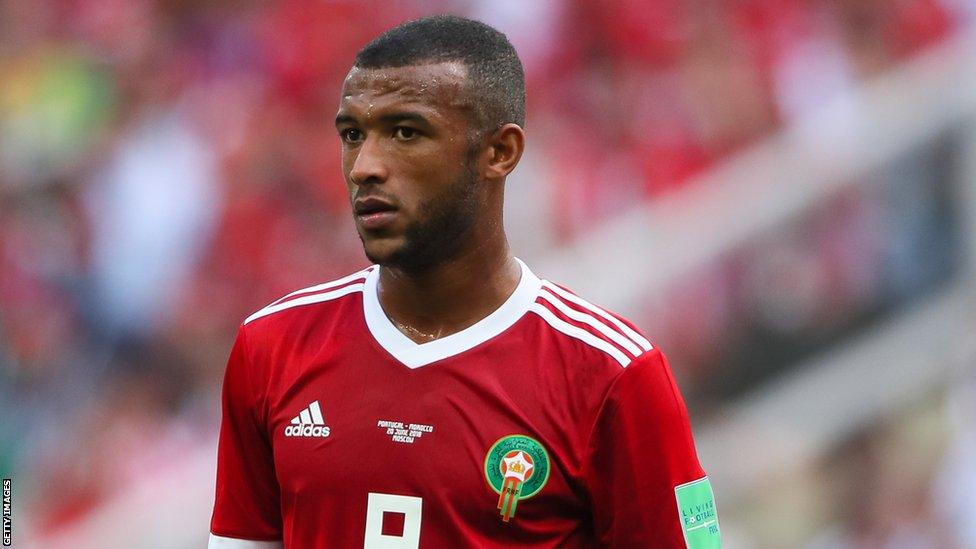
Morocco striker Ayoub El Kaabi joins Hebei China Fortune - BBC Sport
Formation & Key Matchups
Scotland 3-5-2
Steve Clarke has refined his tactical approach over several years of international management, settling on a flexible 3-5-2 formation that prioritises defensive solidity while offering avenues for rapid counter-attacks. The system relies heavily on wing-backs Andy Robertson and Nathan Patterson to provide width and attacking thrust, allowing the three central defenders to maintain a compact defensive block. In midfield, John McGinn operates as the advanced playmaker, supported by the box-to-box energy of Scott McTominay and the disciplined positioning of Lewis Ferguson or Kenny McLean. The front pairing typically combines a physical target man, either Lyndon Dykes or Lawrence Shankland, with a more mobile partner in Che Adams or Ross Stewart. Against Morocco's technically gifted midfield, Scotland's primary challenge will be to disrupt passing lanes and prevent the Atlas Lions from establishing rhythm in central areas. The Tartan Army must also be wary of Morocco's high press, which has become increasingly sophisticated under Ouahbi and could force errors in Scotland's build-up play. Clarke's side will likely cede possession and look to exploit transitions, using McTominay's late runs into the box and Robertson's delivery from wide areas as their primary attacking weapons.
Morocco 4-3-3
Mohamed Ouahbi has transformed Morocco's tactical identity since taking charge in March 2026, shifting from Walid Regragui's conservative 4-1-4-1 to a more progressive 4-3-3 that emphasises ball retention and positional interchange. The back four is anchored by Nayef Aguerd and Issa Diop, with Achraf Hakimi given license to bomb forward from right-back and Noussair Mazraoui providing balance on the left. The midfield trio typically features Sofyan Amrabat as the deepest-lying pivot, allowing Azzedine Ounahi and Bilal El Khannouss to advance and link with the front three. Brahim Díaz operates as the false nine or advanced playmaker, drifting between lines to create overloads, while Ayoub El Kaabi provides a genuine focal point in attack. Morocco's build-up play is patient and methodical, often drawing opponents forward before exploiting space in behind with Hakimi's blistering pace or Díaz's incisive passing. Against Scotland's compact defensive block, Morocco will need to vary their approach, mixing patient circulation with direct balls to El Kaabi and utilising Hakimi's overlapping runs to stretch the Scottish back three horizontally. The Atlas Lions averaged 5.9 shots on target per game during qualification, a testament to their ability to break down organised defences.
Critical Vulnerability
The most significant tactical vulnerability in this fixture lies in Scotland's ability to manage Morocco's transitions from defence to attack. While Clarke's 3-5-2 offers defensive security, it can become stretched when wing-backs Robertson and Patterson are caught high up the pitch. Morocco's forward players, particularly Brahim Díaz and Ayoub El Kaabi, possess the intelligence and technical quality to exploit the spaces that open up behind Scotland's wing-backs during turnovers. Additionally, Scotland's reliance on 43-year-old goalkeeper Craig Gordon, despite his remarkable season with Hearts, raises questions about his ability to command the penalty area against Morocco's aerial threats from set-pieces. Conversely, Morocco's high defensive line, necessary for their possession game, could be vulnerable to Scotland's direct balls over the top for the pace of Che Adams or the physical presence of Lawrence Shankland. The midfield battle will be decisive; if McGinn and McTominay can disrupt Morocco's build-up and force turnovers in dangerous areas, Scotland have the quality to punish any defensive lapses. However, if Morocco establish control in central areas, their technical superiority could overwhelm Scotland's defensive structure.
Team News & Squad Status
Scotland 📈
- Craig Gordon (GK): The 43-year-old Hearts goalkeeper has overcome a shoulder injury to reclaim his status as Scotland's No. 1. His experience is invaluable, though his age raises fitness concerns over a tournament schedule. Gordon kept the most clean sheets in the Scottish Premiership this season with 34 goals conceded.
- Andy Robertson (C): The Liverpool left-back and captain arrives with 92 caps, just 10 shy of Kenny Dalglish's all-time record. Robertson has been replaced as first-choice at Anfield by Milos Kerkez but remains Scotland's most influential player and leader.
- Scott McTominay: The Napoli midfielder was named 2024-25 Serie A Player of the Year after a stunning debut season in Italy. His bicycle kick against Denmark in qualifying has become an iconic moment in Scottish football history, inspiring a mural at Hampden Park.
- Billy Gilmour (INJURED): The Napoli midfielder was forced to withdraw from the squad after picking up an injury in the warm-up friendly against Curacao on May 30. His absence is a significant blow to Scotland's midfield creativity.
- Tyler Fletcher: The 19-year-old Manchester United academy graduate has been drafted in as Gilmour's replacement. Son of former Scotland captain Darren Fletcher, he made his international debut in the Curacao match and impressed Clarke with his composure.
- Kieran Tierney: Returned to Celtic in summer 2025 after struggling for game time at Arsenal. The 28-year-old has rediscovered his form in Glasgow and provides valuable defensive cover and versatility across the back line.
- Lawrence Shankland: The Hearts captain scored 20 goals in all competitions this season, narrowly missing out on a Scottish Premiership title on the final day. He is currently Scotland's most in-form striker and pushing for a starting berth ahead of Che Adams.
- Ross Stewart: Ended a four-year international exile by earning a recall after scoring 11 goals for Southampton this season, including a crucial strike in the Championship playoff semi-final against Middlesbrough.
Morocco 🦁
- Achraf Hakimi (C): The Paris Saint-Germain right-back and captain arrives with 95 caps and 11 international goals. Widely regarded as one of the best full-backs in world football, Hakimi's stamina, crossing ability, and defensive composure make him Morocco's most irreplaceable player.
- Brahim Díaz: The Real Madrid forward has become Morocco's creative hub since switching allegiance from Spain. His ability to operate between the lines and link midfield with attack will be crucial against Scotland's compact defensive block.
- Ayoub El Kaabi: The Olympiacos striker averaged an incredible 1.69 goals per 90 minutes during CAF World Cup qualification, finishing as the group's top scorer with four goals. His physical presence and clinical finishing provide Morocco with a genuine focal point.
- Sofyan Amrabat: Now at Real Betis after his loan spell at Manchester United, Amrabat has matured into one of the most complete defensive midfielders in international football. His ability to break up play and initiate attacks will be vital in controlling Scotland's counter-attacking threat.
- Yassine Bounou: The Al-Hilal goalkeeper remains Morocco's undisputed No. 1 after his heroics at Qatar 2022. His shot-stopping ability and command of the penalty area provide a solid foundation for Morocco's defensive structure.
- Noussair Mazraoui: The Manchester United left-back offers defensive solidity and attacking thrust down Morocco's left flank. His battle with Scotland's right wing-back Nathan Patterson will be one of the key individual duels of the match.
- Sofiane Boufal (OMITTED): One of the heroes of Morocco's 2022 World Cup campaign, the Le Havre winger was surprisingly left out of Ouahbi's final 26-man squad. The coach opted for a younger, more athletic squad built to dominate possession rather than rely on individual brilliance.
- Mohamed Ouahbi: The new head coach took charge just three months before the tournament, replacing Walid Regragui. Ouahbi previously led Morocco's U-20 side to a global championship in Chile in October 2025 and built his coaching foundation in Belgium's youth academies.
Predicted Lineups
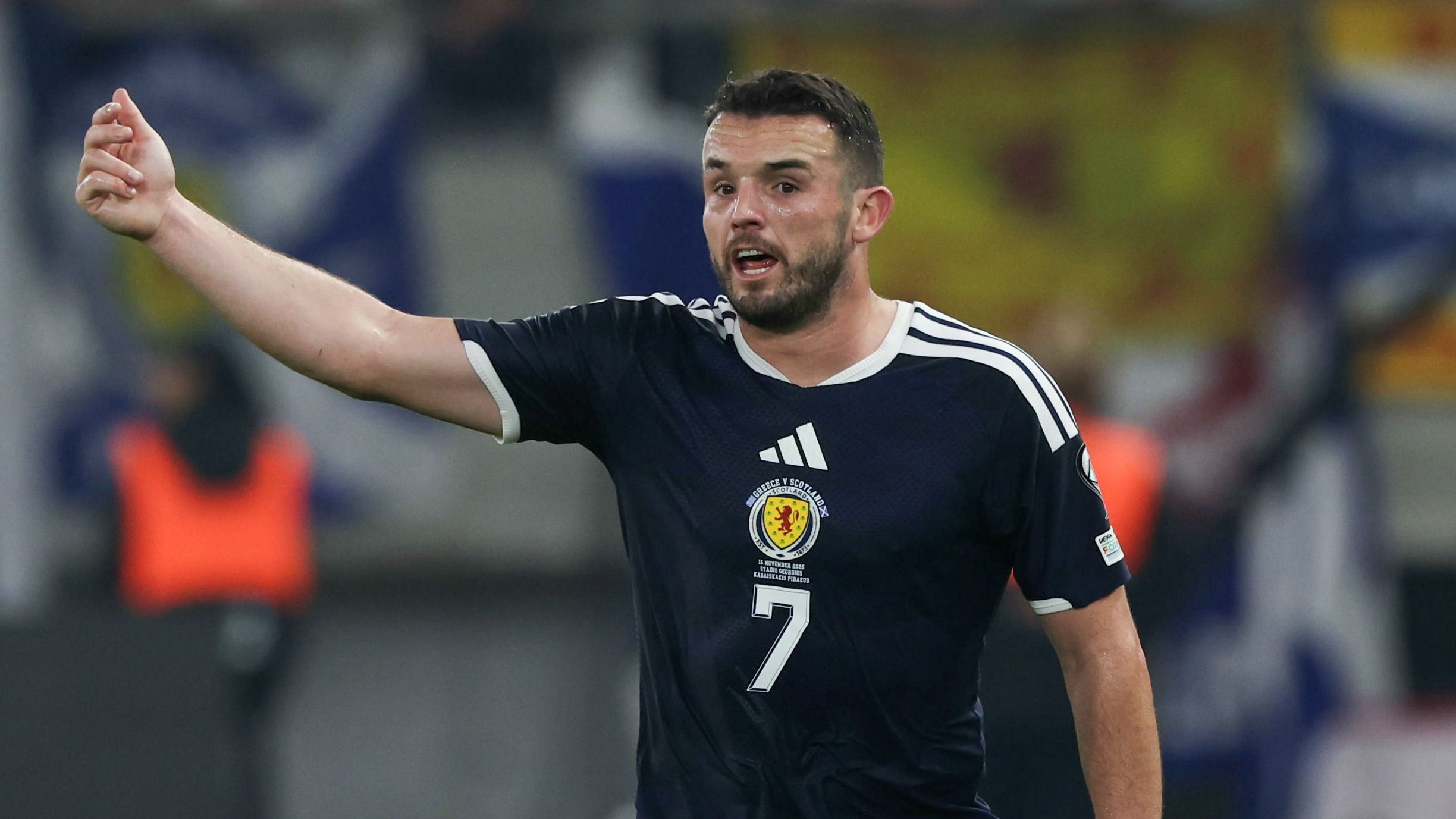
John McGinn: Scotland 'can't let go' of World Cup chance against Denmark - BBC Sport
| Scotland 3-5-2 | Morocco 4-3-3 |
|---|---|
| Craig Gordon (GK) | Yassine Bounou (GK) |
| Jack Hendry (CB) | Achraf Hakimi (RB) |
| Grant Hanley (CB) | Nayef Aguerd (CB) |
| Scott McKenna (CB) | Issa Diop (CB) |
| Nathan Patterson (RWB) | Noussair Mazraoui (LB) |
| John McGinn (CM) | Sofyan Amrabat (DM) |
| Lewis Ferguson (CM) | Azzedine Ounahi (CM) |
| Scott McTominay (CM) | Bilal El Khannouss (CM) |
| Andy Robertson (LWB) | Brahim Díaz (RW) |
| Che Adams (ST) | Ayoub El Kaabi (ST) |
| Lawrence Shankland (ST) | Abdessamad Ezzalzouli (LW) |
Head-to-Head Record

Achraf Hakimi Reveals Why He Picked Morocco Over Spain | beIN SPORTS
The historical head-to-head record between Scotland and Morocco is remarkably sparse, with only one previous competitive meeting between the two nations. That solitary encounter came during the 1998 FIFA World Cup in France, when Morocco secured a comprehensive 3-0 victory over the Tartan Army in Saint-Étienne. The Atlas Lions' goals that day came from Abdeljalil Hadda, Salaheddine Bassir, and Abdelkrim El Hadrioui, a result that condemned Scotland to yet another group stage exit and left an indelible mark on the Scottish football psyche. For a generation of Scotland supporters, that defeat symbolised the nation's struggles on the world stage and contributed to the 28-year wait for a return to the tournament finals. The psychological weight of that result cannot be underestimated; while none of the current Scotland squad were present in 1998, the narrative of redemption has been a powerful motivating factor throughout Clarke's tenure. Morocco, conversely, will draw confidence from their historical dominance and the knowledge that they have never failed to score against Scotland.
Beyond the raw statistics, the context of that 1998 meeting offers fascinating parallels to the present day. Both nations entered that tournament with realistic hopes of progression, drawn in a group that also contained Norway and Brazil. Scotland's campaign unravelled after a promising 1-1 draw with Norway, while Morocco's victory over the Scots proved to be their only points of the tournament as they subsequently lost to Brazil and Norway. The cyclical nature of football has brought these two nations back together 28 years later, once again in a group containing Brazil, though this time Haiti replaces Norway as the fourth participant. Morocco have since established themselves as Africa's premier footballing nation, reaching the semi-finals in Qatar 2022 and winning the 2025 Africa Cup of Nations, while Scotland have endured a prolonged period of international wilderness before Clarke's transformative leadership. The Atlas Lions are currently unbeaten in 29 matches and have lost only twice in their last 45 games, a streak of consistency that Scotland must somehow disrupt if they are to rewrite the historical narrative.
Key Players Comparison
The individual battles across the pitch will likely determine the outcome of this fascinating encounter. In midfield, the contrast between Scotland's physical, direct approach and Morocco's technical, possession-based game creates a compelling tactical dichotomy. Scott McTominay has been reborn since joining Napoli from Manchester United, transforming from a utility player into one of Europe's most feared box-to-box midfielders. His ability to arrive late in the penalty area, combined with his aerial threat from set-pieces, makes him Scotland's most dangerous attacking outlet despite playing in a deeper role. Against him, Sofyan Amrabat must use his reading of the game and positional discipline to neutralise McTominay's forward runs while still initiating Morocco's build-up play. John McGinn, Scotland's vice-captain and record scorer in qualifying campaigns with 14 goals, provides the creative spark and emotional leadership that drives the Tartan Army forward. His battle with Azzedine Ounahi, who emerged as one of the breakout stars of Qatar 2022, will be a contest of contrasting styles: McGinn's relentless pressing and powerful running against Ounahi's close control and dribbling ability.
The Managers
Steve Clarke
Steve Clarke has achieved what no Scotland manager has managed since Craig Brown in 1998: qualification for the FIFA World Cup. The former Chelsea and West Ham United defender took charge in 2019 and has systematically rebuilt Scottish football's international credibility. Clarke's tactical approach is defined by pragmatism and organisation; he has instilled a defensive discipline that allows Scotland to compete against technically superior opponents while still posing a threat on the counter-attack. His man-management skills have been equally impressive, reintegrating players such as Kieran Tierney and Ross Stewart into the squad while giving debuts to teenagers like Findlay Curtis and Tyler Fletcher. Clarke's greatest achievement was fostering a squad mentality where players genuinely believe they can compete at the highest level, a psychological shift that was evident in the dramatic qualification victory over Denmark. His experience as an assistant manager at Liverpool and Chelsea under Rafa Benítez and José Mourinho respectively has given him a sophisticated understanding of tournament football, and he will need every ounce of that wisdom to navigate a group containing Brazil, Morocco, and Haiti.
Clarke's selection decisions for this match will be fascinating. Does he stick with the experienced core of Robertson, McGinn, and McTominay, or does he gamble on the in-form Lawrence Shankland ahead of the established Che Adams? The loss of Billy Gilmour to injury has disrupted Clarke's midfield plans, forcing him to rely on the youthful Tyler Fletcher or the experienced Kenny McLean. Clarke's ability to make decisive tactical adjustments during matches has improved markedly during his tenure, and he will need to be at his reactive best if Morocco establish early control of possession. The Scotland manager has consistently emphasised the importance of collective effort over individual brilliance, and that philosophy will be severely tested against a Morocco side blessed with genuine world-class talent. Clarke's contract runs until 2028, reflecting the Scottish FA's confidence that he is the man to lead the nation through this World Cup cycle and beyond.
Mohamed Ouahbi
Mohamed Ouahbi faces the unenviable task of following Walid Regragui, the architect of Morocco's historic Qatar 2022 campaign. The 49-year-old Belgian-Moroccan coach was thrust into the senior role in March 2026, just three months before the World Cup, after Regragui's departure. Ouahbi's credentials are substantial nonetheless; he led Morocco's U-20 side to a global championship in Chile in October 2025 and built his coaching reputation in Belgium's youth academies at Maccabi Brussels and Anderlecht before joining the Royal Moroccan Football Federation. His appointment represents a calculated gamble by the federation, prioritising tactical continuity and youth development over the charismatic leadership that defined Regragui's tenure. Ouahbi has wasted no time in imposing his philosophy, shifting Morocco's tactical approach from counter-attacking pragmatism to possession-based dominance. The early results have been encouraging, with Morocco maintaining their unbeaten run and integrating new faces such as Ayyoub Bouaddi and Samir El Mourabet into the senior setup.
Ouahbi's biggest challenge against Scotland will be managing the expectations of a squad that genuinely believes it can improve on its fourth-place finish from 2022. The Atlas Lions are no longer underdogs; they are a top-10 nation with elite club stars and a tactical identity that demands control of every match. Ouahbi must ensure his players do not underestimate a Scotland side that has proven its resilience and organisation throughout qualification. His decision to omit Sofiane Boufal, one of the heroes of 2022, sent a clear message that this Morocco squad is built on collective discipline rather than individual flair. Against Scotland's compact defensive block, Ouahbi will need his creative players, particularly Brahim Díaz and Bilal El Khannouss, to find solutions in tight spaces. The Moroccan coach's ability to make effective in-game adjustments will be crucial, particularly if Scotland successfully frustrate Morocco's possession game and the match remains goalless deep into the second half.
Betting Predictions & Tips
Odds: 1.72
This fixture has all the hallmarks of a low-scoring, tactically disciplined encounter. Scotland's defensive organisation under Steve Clarke has been the foundation of their success, and they will prioritise preventing Morocco from finding rhythm over committing bodies forward. Morocco, while more attack-minded than in previous tournaments, have shown a tendency to be methodical rather than explosive in their build-up play. With both teams understanding the importance of avoiding defeat in this second group game, a cautious approach is highly probable. Scotland kept six clean sheets in their final eight qualifying matches, while Morocco conceded only twice across their entire CAF qualification campaign. The value in the under 2.5 goals market is compelling, particularly given the high stakes and the likelihood that both managers will err on the side of caution. For bettors seeking a reliable over under prediction for this World Cup fixture, the under 2.5 represents the most logical starting point.
Odds: 3.40
Our primary prediction for this match is a 0-0 draw, and the outright draw odds of 3.40 offer exceptional value for a fixture between two evenly matched, defensively organised teams. Scotland's approach in major tournament games has consistently prioritised solidity over ambition, and Clarke will be acutely aware that a point against Morocco keeps his team's destiny in their own hands heading into the final group game against Brazil. Morocco, fresh from their opening match against Brazil, may also view a draw as an acceptable result that maintains their unbeaten record and avoids unnecessary risk. The draw prediction market often offers inflated odds in matches featuring a perceived gulf in quality, but Scotland's defensive resilience and Morocco's methodical approach suggest this will be a tight, attritional contest. With both teams possessing match-winners but prioritising defensive discipline, the draw is the most likely outcome.
Odds: 8.50
The correct score market offers lucrative returns for those willing to predict the exact outcome, and our analysis points firmly toward a goalless draw. Scotland's defensive record in competitive fixtures under Clarke is exemplary; they have kept clean sheets in 60% of their matches since 2023. Morocco's evolution into a possession-dominant side has not diminished their defensive solidity, with Yassine Bounou remaining one of the most reliable goalkeepers in international football. The tactical battle suggests a game of few clear-cut chances, with both teams cancelling each other out in midfield. For bettors exploring correct score tips for World Cup 2026, the 0-0 result offers a combination of statistical probability and attractive odds that is difficult to ignore. The lack of historical head-to-head data beyond the 1998 meeting means both managers will approach this fixture with caution, further supporting the case for a stalemate.
Odds: 1.95
The both teams to score market provides an excellent alternative for those who anticipate a defensive battle but prefer not to predict the exact scoreline. Scotland's attacking output in major tournaments has historically been modest, and while McTominay and McGinn offer goal threats from midfield, breaking down Morocco's well-organised back four will be a significant challenge. Conversely, Morocco's attacking prowess, while impressive in African qualification, faces its toughest test yet against a Scottish defence that has been drilled relentlessly by Clarke. The GG/NG prediction market favours the "No" option at 1.95, reflecting the probability that at least one team will fail to find the net. With both defences likely to dominate and both attacks struggling for fluency, this bet offers a solid foundation for any World Cup accumulator.
Odds: 2.10
For those seeking a speculative angle with strong underlying logic, the half-time draw market at 2.10 offers intriguing value. Both Scotland and Morocco are likely to spend the opening 45 minutes feeling each other out, with cautious tactical approaches and a focus on avoiding early mistakes. Clarke has consistently set his Scotland teams up to grow into matches, and the first half often serves as a period of defensive consolidation. Morocco, under Ouahbi's new management, may also take time to find their rhythm against unfamiliar opposition. The fulltime prediction models suggest a high probability of the scoreline remaining level at the interval, making this an attractive option for bettors who prefer to focus on specific match segments. If the game remains goalless at half-time, expect both managers to make tactical adjustments that could open up the second period, but the first 45 minutes should be a cagey affair.
📊 Final Score Prediction
Match Analysis
Our prediction of a 0-0 draw is founded on a comprehensive analysis of both teams' tactical approaches, recent form, and the specific context of this World Cup group stage fixture. Scotland under Steve Clarke have built their success on defensive organisation and collective discipline. The Tartan Army conceded just 34 goals in the Scottish Premiership this season, the best defensive record in the league, and that solidity has translated seamlessly to the international stage. With Craig Gordon, despite his 43 years, providing commanding presence between the posts and a back three of Jack Hendry, Grant Hanley, and Scott McKenna offering experience and aerial dominance, Scotland possess the defensive tools to frustrate even the most potent attacks. Morocco's evolution under Mohamed Ouahbi has made them a more possession-oriented side, but that transition has not come at the expense of their defensive resilience. The Atlas Lions conceded only twice in eight CAF qualification matches and have maintained six clean sheets in their last eight competitive fixtures.
The midfield battle will be decisive in determining the flow of this match, and it is here that the case for a goalless draw becomes most compelling. Scotland's midfield trio of John McGinn, Scott McTominay, and Lewis Ferguson is designed to disrupt, press, and counter rather than to control possession. They will willingly cede the ball to Morocco and look to exploit transitions, but Morocco's own midfield of Sofyan Amrabat, Azzedine Ounahi, and Bilal El Khannouss is technically gifted enough to retain possession under pressure without taking unnecessary risks. The result is likely to be a stalemate in central areas, with Morocco enjoying territorial superiority but struggling to create clear-cut chances against Scotland's compact defensive block. For bettors seeking prediction football today for this World Cup clash, the evidence overwhelmingly supports a low-scoring, defensively dominated encounter. The 0-0 result offers value in the correct score market and aligns perfectly with the tactical identities of both teams.
Key Insights & Statistics
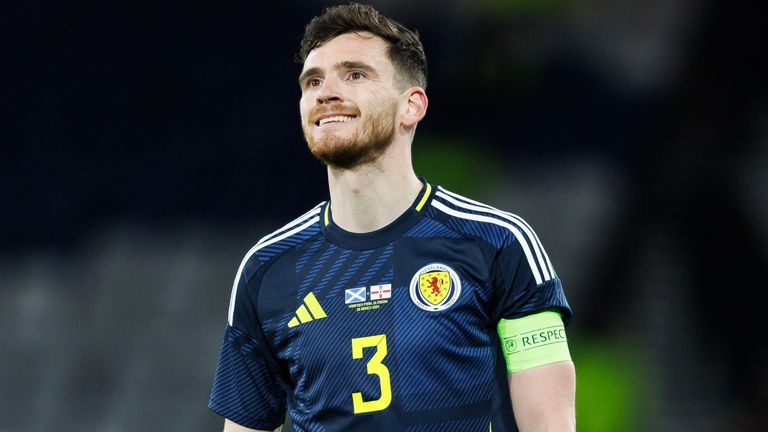
Captain Andy Robertson tells Sky Sports News the squad's target is to 'create history' by being the first Scotland team to reach the knockouts of a major finals at Euro 2024.
- Scotland's World Cup Return: This is Scotland's first World Cup appearance since 1998, ending a 28-year absence. Steve Clarke's squad has been drawn in the same group as Brazil and Morocco, mirroring their 1998 group stage opponents.
- Morocco's Unbeaten Run: The Atlas Lions are currently unbeaten in 29 matches and have lost only twice in their last 45 games, a streak that includes their historic fourth-place finish at Qatar 2022 and victories in the 2025 Arab Cup and 2026 Africa Cup of Nations.
- Defensive Dominance: Scotland kept six clean sheets in their final eight World Cup qualifying matches, while Morocco conceded only two goals across their entire CAF qualification campaign, recording six clean sheets in eight games.
- McTominay's Transformation: Scott McTominay was named 2024-25 Serie A Player of the Year after joining Napoli from Manchester United. He has scored 20 goals in 69 caps for Scotland and was instrumental in the qualification campaign.
- Hakimi's Leadership: Achraf Hakimi captains Morocco with 95 caps and 11 goals. The Paris Saint-Germain right-back is widely regarded as one of the best full-backs in world football and provides both defensive security and attacking thrust.
- Qualification Contrasts: Morocco qualified with a perfect record of eight wins from eight matches in CAF Group E, scoring 22 goals. Scotland secured their place through the UEFA playoffs with a dramatic 4-2 victory over Denmark at Hampden Park.
- Venue Familiarity: Both teams will play their opening two group matches at Gillette Stadium in Foxborough, with Scotland facing Haiti on June 13 and Morocco meeting Brazil on June 14 before this pivotal second-round fixture on June 19.
- Managerial Experience: Steve Clarke has managed Scotland since 2019 and previously worked as an assistant at Liverpool and Chelsea. Mohamed Ouahbi took charge of Morocco in March 2026 after leading the U-20 team to a global championship.
- Historical Precedent: The only previous meeting between these nations was at the 1998 World Cup, where Morocco defeated Scotland 3-0 in Saint-Étienne, a result that eliminated the Tartan Army from the tournament.
- Squad Depth: Scotland's 26-man squad includes 43-year-old goalkeeper Craig Gordon, who is set to become the second-oldest player in World Cup history. Morocco's squad features players from Real Madrid, Paris Saint-Germain, Manchester United, and other elite European clubs.
Conclusion
The Scotland vs Morocco fixture at the 2026 FIFA World Cup represents a fascinating tactical chess match between two teams with contrasting styles but shared ambitions. Scotland's return to the world stage after 28 years has been built on defensive resilience, collective organisation, and the individual brilliance of players such as Scott McTominay and Andy Robertson. Steve Clarke has instilled a belief and discipline that allows the Tartan Army to compete against technically superior opponents, and they will need every ounce of that spirit against a Morocco side that has established itself as one of the top 10 nations in world football. The Atlas Lions arrive in North America with the confidence of their Qatar 2022 fourth-place finish and a flawless qualification record, but they also carry the pressure of expectation that comes with such achievements. Mohamed Ouahbi's tactical evolution has made Morocco more possession-dominant, yet that shift has not diminished their defensive solidity or their ability to manage high-stakes encounters.
Our prediction of a 0-0 draw reflects the tactical realities of this fixture more than any deficiency in attacking quality. Both teams possess match-winners capable of producing moments of brilliance, but the context of the group stage and the respective managerial philosophies suggest a cautious, defensively oriented approach. Scotland will prioritise preventing Morocco from establishing rhythm, while Morocco will be wary of committing too many bodies forward against Scotland's dangerous counter-attacking threat. The midfield battle between McTominay, McGinn, and Ferguson against Amrabat, Ounahi, and El Khannouss will likely determine the flow of the game, and our analysis suggests a stalemate in this crucial area of the pitch. For bettors, the under 2.5 goals market, the draw, and the both teams to score "No" option all offer value based on the statistical and tactical evidence. As the Tartan Army and the Atlas Lions prepare to write a new chapter in their footballing histories at Gillette Stadium, the smart money suggests a tense, tactical affair that ends with honours even and both teams living to fight another day in their quest for World Cup glory.
Ultimately, this match encapsulates the beauty of tournament football: the collision of different footballing cultures, the weight of national expectation, and the fine margins that separate success from failure. Whether Scotland can exact revenge for their 1998 defeat or Morocco can continue their remarkable journey of global recognition, one thing is certain: the 65,878 fans at Gillette Stadium and millions watching worldwide are set for a compelling contest that showcases the very best of international football. For those seeking World Cup 2026 betting tips and expert analysis, this fixture serves as a perfect example of how tactical understanding, historical context, and statistical insight can combine to inform intelligent betting decisions. The 0-0 prediction may not satisfy those seeking goalmouth drama, but it represents the most probable outcome in a match where defensive discipline and tactical caution are likely to prevail.