Australia vs Egypt: Match Preview, Predictions and Betting Tips
Published on Wednesday, 01 July 2026 by Steve


Australia vs Egypt
FIFA World Cup 2026™ Round of 32 Prediction & Betting Tips
Match Overview
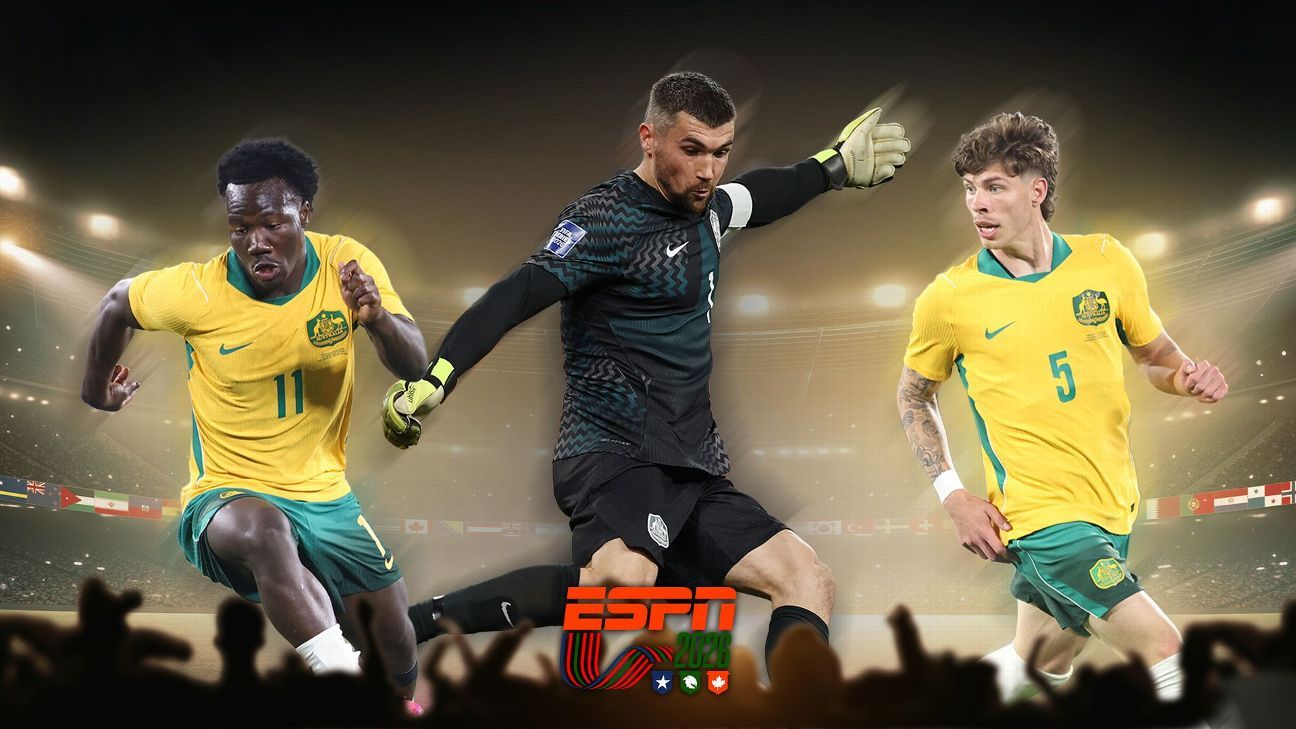
Ryan, Leckie equal record with fourth World Cup - ESPN
The 2026 FIFA World Cup has delivered one of its most intriguing Round of 32 fixtures as Australia prepare to face Egypt at the magnificent AT&T Stadium in Arlington, Texas. This historic clash represents far more than a standard knockout tie — it is a meeting of two footballing cultures from opposite ends of the globe, each carrying the weight of national expectation and the burning desire to rewrite their World Cup histories. For the Socceroos, this represents an opportunity to claim their maiden knockout stage victory at football's greatest tournament, while the Pharaohs are competing in their first-ever World Cup knockout match, having finally broken through the group stage barrier after nearly a century of trying.
The significance of this fixture cannot be overstated. Australia advanced from Group D as runners-up behind co-hosts the United States, securing their place in the Round of 32 through a combination of defensive resilience and moments of individual brilliance. Tony Popovic's side opened their campaign with a spirited 2-0 victory over Türkiye in Vancouver, with Nestory Irankunda and Connor Metcalfe finding the net. However, they subsequently suffered a 2-0 defeat to the USA in Seattle before grinding out a crucial 0-0 draw against Paraguay to seal their progression. Meanwhile, Egypt emerged from Group G in second place behind Belgium, showcasing remarkable consistency throughout their group stage journey. Hossam Hassan's men began with a hard-fought 1-1 draw against Belgium in Seattle, followed by a historic 3-1 triumph over New Zealand in Vancouver — their first-ever World Cup victory — before concluding with another 1-1 stalemate against IR Iran.
The expanded 48-team format of the 2026 World Cup has created this fascinating Round of 32 encounter, with both nations benefiting from the tournament's new structure that allows more teams to experience knockout football. The match promises to be a tactical chess match between two managers who have instilled distinctly different philosophies in their squads. Popovic has built a Socceroos team founded on defensive organisation, physicality, and disciplined structure, while Hassan has crafted an Egypt side that balances defensive solidity with the individual brilliance of Mohamed Salah and the emerging talent of Omar Marmoush. With both teams having demonstrated a propensity for low-scoring affairs during the group stage, this encounter has all the ingredients for a tense, tactical battle where a single moment of quality could decide the outcome. The stakes could not be higher — win and advance to the Round of 16, lose and face the heartbreak of elimination.
Tactical Preview

Egypt vs Australia World Cup 2026 match date, kickoff time and broadcast details
Formation & Key Matchups
Australia 3-4-2-1 / 5-4-1 Defensive Block
Tony Popovic has deployed a pragmatic, defensively-minded system throughout Australia's World Cup campaign, prioritising solidity over flair. The Socceroos typically operate with a back three featuring Harry Souttar as the commanding central figure, flanked by Alessandro Circati and the versatile Cameron Burgess or young Lucas Herrington. This defensive foundation allows wing-backs Jordan Bos and Jacob Italiano to provide width in attack while dropping deep to form a five-man defensive line when out of possession. In midfield, Jackson Irvine and Aiden O'Neill form a disciplined double pivot, tasked with screening the defence and breaking up opposition attacks before they reach the back three. The forward line has been a rotating cast, with Nestory Irankunda providing the primary attacking threat through his explosive pace and powerful striking ability, supported by the experience of Mathew Leckie and the industry of Connor Metcalfe. Australia's tactical approach has been characterised by compact defensive blocks, limited pressing, and a reliance on set pieces and transitions for goal-scoring opportunities. Popovic's side has conceded just two goals in three group matches, testament to their defensive organisation, but has also struggled to create consistent attacking threats, scoring only twice from open play.
Egypt 4-2-3-1 / 4-3-3 Flexible Shape
Hossam Hassan has crafted a tactically flexible Egypt side that can adapt its shape depending on the opposition and match situation. The Pharaohs typically line up in a 4-2-3-1 formation that transitions into a 4-3-3 when pressing higher up the pitch. The defensive line is anchored by Mohamed Abdelmonem and Yasser Ibrahim, with Mohamed Hany and Ahmed Fatouh providing width and defensive cover as full-backs. The double pivot of Emam Ashour and Hamdy Fathy offers a blend of creativity and defensive steel, allowing the attacking quartet to flourish. Mohamed Salah operates primarily from the right flank but enjoys complete freedom to drift centrally, interchange positions, and exploit spaces between the lines. Omar Marmoush leads the line with intelligent movement and clinical finishing, supported by the trickery of Trezeguet and the vision of Mostafa Ziko or Ahmed Zizo. Egypt's tactical flexibility was evident throughout the group stage, where they demonstrated the ability to control possession against New Zealand while remaining compact and dangerous on the counter-attack against Belgium. Hassan's system relies heavily on Salah's individual brilliance, but the supporting cast has proven capable of sharing the attacking burden, with five different scorers across their three group matches.
Critical Vulnerability
Australia's most significant tactical vulnerability lies in their chronic inability to generate sustained attacking pressure against organised defences. The Socceroos managed just two goals in three group stage matches, and both came in their opening fixture against Türkiye. In subsequent matches against the USA and Paraguay, Australia failed to register a single goal, managing only a handful of shots on target across 180 minutes of football. This attacking impotence is compounded by the absence of a truly world-class creative midfielder who can unlock compact defensive blocks. While Jackson Irvine provides energy and leadership, and Ajdin Hrustic offers technical quality, neither possesses the vision or incision required to break down a well-organised Egypt defence. Furthermore, Australia's reliance on set pieces — particularly corners and long throw-ins utilising Harry Souttar's aerial presence — becomes less effective against teams who are physically imposing and well-drilled in defensive set-piece situations. Egypt, with their experienced backline and the commanding presence of Mohamed El Shenawy in goal, are unlikely to be troubled by Australia's primary attacking weapon. If Popovic's side cannot find a way to create chances from open play, they risk being suffocated by Egypt's defensive discipline and counter-attacking threat.
Team News & Squad Status
Australia 📊
- Mathew Ryan (GK, Levante): Captain and record-equalling fourth World Cup appearance. 104 caps, rock-solid between the posts.
- Harry Souttar (CB, Leicester City): Returned from 18-month Achilles injury to start all three group games. Colossal aerial threat at both ends.
- Jackson Irvine (CM, St Pauli): Third World Cup, 82 caps, 14 goals. The midfield engine and emotional leader of this Socceroos side.
- Nestory Irankunda (FW, Watford): 20-year-old sensation with 5 goals from 14 caps. Scored in the opening win against Türkiye. Australia's primary attacking threat.
- Mathew Leckie (FW, Melbourne City): Fourth World Cup, 80 caps. Recovered from hip surgery in December to make the squad. Scored the iconic winner against Denmark in 2022.
- Cristian Volpato (MF, Sassuolo): Uncapped playmaker who switched allegiance from Italy. Yet to make his debut but provides creative depth from the bench.
- Tete Yengi (FW, Machida Zelvia): Uncapped 6'5" striker. Younger brother of Kusini Yengi. Physical presence option late in games.
- Lucas Herrington (CB, Colorado Rapids): At 18, the youngest player in the squad. Could become youngest Australian World Cup starter if selected.
- Squad Fitness: Full 26-player squad available. No injury concerns reported ahead of the knockout clash.
Egypt 🔥
- Mohamed Salah (FW, Liverpool): Captain, 116 caps, 67 goals. Two goals shy of Hossam Hassan's all-time Egyptian scoring record. Scored against New Zealand in the group stage.
- Omar Marmoush (FW, Manchester City): Breakthrough Premier League star. Egypt's second-highest goal threat with intelligent movement and clinical finishing.
- Mohamed El Shenawy (GK, Al Ahly): 37-year-old veteran, Egypt's most experienced goalkeeper. Commanding presence and organiser of the defence.
- Emam Ashour (MF, Al Ahly): Scored the opening goal against Belgium. Provides creativity, energy, and defensive work rate in midfield.
- Trezeguet (MF, Al Ahly): Former Aston Villa winger, experienced campaigner. Scored in the 3-1 win over New Zealand. Dangerous from wide positions.
- Mohamed Abdelmonem (CB, Nice): Returned from injury ahead of the tournament. Key component of Egypt's defensive solidity.
- Mostafa Ziko (MF, Pyramids): Emerging talent who scored against New Zealand. Provides youthful energy and attacking thrust.
- Hossam Abdelmaguid (CB, Zamalek): 24-year-old defensive standout. Starred at AFCON 2025 and carried form into the World Cup.
- Squad Fitness: Full squad available. No reported injuries. Mohamed Salah left Liverpool on a free transfer after 442 appearances and 257 goals, arriving at the World Cup fully focused on national team glory.
Predicted Lineups

Socceroos news: Nestory Irankunda's World Cup message
| Australia 3-4-2-1 | Egypt 4-2-3-1 |
|---|---|
| Mathew Ryan (GK, C) | Mohamed El Shenawy (GK) |
| Jason Geria (RWB) | Mohamed Hany (RB) |
| Alessandro Circati (CB) | Mohamed Abdelmonem (CB) |
| Harry Souttar (CB) | Yasser Ibrahim (CB) |
| Lucas Herrington (CB) | Ahmed Fatouh (LB) |
| Jordan Bos (LWB) | Hamdy Fathy (CDM) |
| Aiden O'Neill (CM) | Emam Ashour (CDM) |
| Jackson Irvine (CM) | Mostafa Ziko (RW) |
| Connor Metcalfe (CAM) | Mohamed Salah (CAM, C) |
| Mathew Leckie (CAM) | Trezeguet (LW) |
| Nestory Irankunda (ST) | Omar Marmoush (ST) |
Head-to-Head Record

How Egypt earned historic win over New Zealand at World Cup 2026 as Salah scores winning goal - The Athletic
Australia and Egypt have met on just two previous occasions in their footballing histories, making this Round of 32 clash at the 2026 World Cup their third ever competitive meeting and their first at a major tournament. The sparse head-to-head record adds an element of unpredictability to this fixture, as neither side can draw upon extensive historical data to inform their tactical preparations. Both previous encounters came in friendly competitions, with the most recent meeting leaving a lasting impression on Australian football.
The most recent encounter between these nations took place in November 2010 at the Misr Stadium in Cairo, where Egypt secured a comprehensive 3-0 victory over Holger Osieck's Socceroos. On that evening, the Pharaohs dominated proceedings from start to finish, exposing Australia's defensive vulnerabilities and highlighting the gulf in technical quality between the two sides. The Australian starting XI that night featured legendary names including Mark Schwarzer, Brett Emerton, Lucas Neill, Mile Jedinak, Tim Cahill, and Brett Holman — yet even this experienced group could not contain an Egyptian side playing with confidence and flair on home soil. The result served as a wake-up call for Australian football and remains a sore point for Socceroos supporters who remember the one-sided nature of the contest. The only other meeting came in 1987 at the President's Cup in Seoul, South Korea, where the sides played out a 0-0 draw before Australia prevailed 4-3 in a penalty shootout. Frank Arok's Socceroos squad that day included future coaching figures Graham Arnold and Frank Farina, alongside Charlie Yankos and Paul Wade. Given the 16-year gap since their last meeting and the vastly different squads now assembled, this head-to-head history offers limited predictive value — but the psychological shadow of that 2010 defeat may linger for some Australian players and fans.
Key Players Comparison
🇦🇺 Nestory Irankunda
Explosive pace, powerful long-range shooting, and the x-factor Australia desperately needs. Scored against Türkiye in the group opener. Can play as a winger or central striker.
🇪🇬 Mohamed Salah
Ranked as Africa's greatest ever player. Two goals shy of Egypt's all-time scoring record. Left Liverpool after 442 games and 257 goals. Egypt's captain, leader, and talisman.
🇦🇺 Jackson Irvine
Third World Cup appearance. The midfield heartbeat who sets the tempo, breaks up play, and drives the team forward. Emotional leader and one of the most important figures in the squad.
🇪🇬 Omar Marmoush
Breakthrough Premier League season with Manchester City. Intelligent movement, clinical finishing, and strong chemistry with Salah. Egypt's second most dangerous attacking threat.
🇦🇺 Mathew Ryan
Record-equalling fourth World Cup. Former Premier League goalkeeper with 10 World Cup appearances. Commanding, experienced, and Australia's most reliable last line of defence.
🇪🇬 Mohamed El Shenawy
Veteran goalkeeper and one of Egypt's most experienced players. Organises the defence superbly. Kept Egypt competitive throughout the group stage with crucial saves.
The individual battle between Nestory Irankunda and Mohamed Salah encapsulates the broader narrative of this fixture — youth versus experience, raw potential against refined excellence. Irankunda, at just 20 years old, represents the future of Australian football. The Adelaide-born winger joined Bayern Munich as a teenager before moving to Watford, where his explosive pace and thunderous right foot have made him one of the most exciting young talents in the Championship. He announced himself on the international stage by scoring against Palestine in a World Cup qualifier at 18 years and 123 days, becoming Australia's second-youngest goalscorer, and followed that with a brace against Curacao in March 2025. His goal against Türkiye in the World Cup opener demonstrated his ability to perform on the biggest stage, cutting inside from the right and unleashing an unstoppable strike. However, Irankunda is still developing his consistency and decision-making in the final third, and Egypt's experienced defenders will look to frustrate him by denying space in behind and forcing him into crowded areas.
On the opposite flank, Mohamed Salah needs no introduction to football fans worldwide. The Egyptian King has rewritten the record books during his nine-year spell at Liverpool, amassing 257 goals in 442 appearances and winning every major trophy available at club level. At 33, this is almost certainly Salah's final World Cup, and he arrives in North America determined to drag Egypt as far as possible. With 67 international goals from 116 caps, he sits just two strikes behind manager Hossam Hassan's all-time Egyptian record of 69 — a milestone he could realistically achieve in this tournament. Salah's movement, close control, and devastating finishing make him the single most dangerous player on either team. Australia's defensive strategy will inevitably revolve around containing him, likely through double-marking, defensive support from midfield, and limiting his ability to cut inside onto his stronger left foot. If Australia can successfully neutralise Salah, they significantly reduce Egypt's goal threat. If they fail, the Liverpool legend has the quality to settle this match in a matter of moments.
The Managers
Tony Popovic (Australia)
Tony Popovic took charge of the Socceroos with a clear mandate: instil defensive discipline, maximise the potential of Australia's emerging talents, and guide the nation to a first-ever World Cup quarter-final. The former Crystal Palace and Sydney FC defender has brought a pragmatic, results-oriented approach to the national team, prioritising organisational solidity over expansive attacking football. Popovic's managerial career has been defined by success in the A-League, where he won multiple championships with Sydney FC and established a reputation for building well-drilled, physically imposing teams. His appointment ahead of the 2026 World Cup cycle represented a shift towards experience and tactical clarity after the departure of Graham Arnold.
Popovic's approach at this World Cup has been characterised by caution and calculation. He has placed enormous trust in his defensive unit, particularly the back three of Souttar, Circati, and Herrington, while demanding relentless work rate from his midfielders. The Australian manager has not been afraid to make bold selection decisions, including the inclusion of uncapped duo Cristian Volpato and Tete Yengi in his final 26-man squad, and the promotion of 18-year-old Lucas Herrington to a starting role. However, his conservative tactical approach has drawn criticism from some quarters for being overly defensive and failing to unleash the attacking potential of players like Irankunda and Volpato. Popovic's challenge against Egypt is to find the right balance between defensive security and attacking ambition — a tightrope he has struggled to walk throughout the group stage.
Hossam Hassan (Egypt)
Hossam Hassan stands as one of the most significant figures in Egyptian football history, and now he has the opportunity to add managerial glory to his legendary playing career. As Egypt's all-time leading goalscorer with 69 international goals — a record that Mohamed Salah is rapidly approaching — Hassan understands better than anyone the pressure and expectation that comes with representing the Pharaohs. His managerial career has been remarkably varied, encompassing 17 separate stints across Egyptian and regional clubs, including five spells with Al Masry. His appointment as national team manager came after a brief period in charge of Modern Future, and he has since transformed Egypt into a cohesive, competitive unit capable of mixing it with the world's best.
Hassan's management style is characterised by tactical flexibility, emotional intelligence, and an unwavering belief in his players. He has successfully created an environment where Salah can thrive while ensuring that the supporting cast — Marmoush, Trezeguet, Ziko, and Ashour — feel empowered to express themselves. Under Hassan's guidance, Egypt qualified for the World Cup with an impeccable record of eight wins and two draws from ten matches, conceding just two goals in the process. At AFCON 2025, he led the Pharaohs to the semi-finals before a narrow defeat to Senegal. Hassan's ability to adapt his tactics to different opponents has been evident throughout the World Cup group stage, where Egypt showed they could control possession against weaker sides and remain compact and dangerous on the counter against stronger opposition. His experience as a player at the highest level gives him a unique authority in the dressing room, and his understanding of Egyptian football culture makes him the ideal figure to guide the Pharaohs through this historic knockout campaign.
Betting Predictions & Tips
Odds: 1.65
This is the standout selection for this fixture based on overwhelming statistical evidence. Australia's group stage produced just two goals in three matches, with the Socceroos failing to score in two of their three games. Egypt, while more prolific, were involved in two 1-1 draws and their matches have generally been tight, controlled affairs. Both teams have demonstrated defensive solidity — Australia conceded only two goals, Egypt conceded just three — and the knockout stage pressure will only amplify the cautious approach from both managers. The 2026 World Cup has seen a trend towards lower-scoring matches in the knockout rounds, and with both Popovic and Hassan prioritising defensive organisation, this game has all the hallmarks of a low-scoring encounter. The under 2.5 goals market at 1.65 represents excellent value and aligns perfectly with the tactical profiles of both teams.
Odds: 3.20
The draw market offers compelling value at 3.20, particularly when considering the likelihood of a tightly contested, defensive-minded encounter. Both teams have shown a propensity for draws in this tournament — Australia drew 0-0 with Paraguay, while Egypt recorded draws against both Belgium and Iran. The knockout stage dynamic, where a single mistake can prove fatal, naturally encourages conservative tactics from both sides. Neither Australia nor Egypt possesses the attacking firepower to blow the other away, and with both managers likely to prioritise avoiding defeat over chasing victory, a stalemate after 90 minutes is a very realistic outcome. For those seeking value in the match result market, the draw at 3.20 provides an attractive alternative to backing either team to win.
Odds: 1.80
Australia failed to score in two of their three group stage matches, managing goals only against a Türkiye side that was subsequently eliminated with a poor defensive record. The Socceroos' attacking struggles are well-documented, and they face an Egypt defence that conceded just three goals in three group games and kept six clean sheets during their ten-match World Cup qualifying campaign. Conversely, while Egypt possess greater attacking quality through Salah and Marmoush, Australia's defensive organisation — marshalled by Souttar and Ryan — has proven difficult to break down. The "Both Teams to Score — NO" market at 1.80 offers a solid selection, with the most likely scenarios being either a 0-0 draw or a 1-0 victory for either side.
Odds: 7.50
Our primary prediction is a 0-0 draw after 90 minutes, and the 7.50 available on this correct score represents excellent value for a bet that aligns with all the tactical and statistical indicators. Australia's group stage featured a 0-0 draw against Paraguay, and their overall tournament record shows a team that struggles to create clear-cut chances while remaining defensively resolute. Egypt's two draws in the group stage both finished 1-1, but against a defensively organised Australia side, the Pharaohs may find it even more difficult to break through than they did against Belgium or Iran. The 0-0 correct score is a high-risk, high-reward play, but the underlying data supports this outcome as a genuine possibility rather than a speculative long shot. For punters looking for a bigger price on a match that promises to be a tactical chess game, 0-0 at 7.50 is the value selection.
Odds: 6.00 (Salah anytime) / 9.00 (1-0 Egypt)
For those who believe Egypt's individual quality will ultimately prove decisive, Mohamed Salah to score anytime at 6.00 offers a speculative but logical selection. Salah has already found the net at this tournament and carries 67 international goals into this fixture. His ability to produce moments of magic in tight games is well-established, and if this match follows the pattern of a cagey, low-scoring affair, a single Salah goal could be enough to send Egypt through. Combining this with a 1-0 Egypt correct score at 9.00 creates an attractive speculative double for those who fancy the Pharaohs to edge a tight contest. However, this selection goes against our primary prediction of a goalless draw and should be treated as a secondary play for those seeking higher returns.
📊 Final Score Prediction
Match Analysis
Our prediction of a 0-0 draw after 90 minutes is founded upon a comprehensive analysis of both teams' tactical approaches, statistical profiles, and the unique pressures of knockout stage football. Australia enters this fixture having scored just two goals in three group stage matches, with their attacking output diminishing as the tournament progressed — from two goals against Türkiye to zero against both the USA and Paraguay. This declining attacking trend is not coincidental; it reflects Popovic's increasingly conservative approach as the stakes have risen, prioritising defensive solidity over attacking ambition. The Socceroos' primary goal threat comes from set pieces and the individual brilliance of Nestory Irankunda, but Egypt's well-organised defence and experienced goalkeeper Mohamed El Shenawy are unlikely to be troubled by Australia's limited attacking arsenal.
Egypt, while possessing greater attacking quality through the likes of Salah, Marmoush, and Trezeguet, have also demonstrated a tendency towards tight, controlled matches in this tournament. Their 1-1 draws against Belgium and Iran showed a team that is difficult to break down but also struggles to dominate possession against organised opposition. Against Australia's deep defensive block, Egypt may find themselves frustrated by a lack of space in behind and forced to attempt shots from distance or rely on individual moments of brilliance — a strategy that is inherently low-percentage. The knockout stage dynamic amplifies these tendencies; with elimination looming for the loser, both managers will prioritise avoiding mistakes over taking risks. Extra time and potentially penalties appear the most likely outcome, and our 0-0 prediction reflects the tactical reality that both teams are better organised defensively than they are creative in attack. For those exploring draw no bet options or double chance markets, this fixture offers several avenues for strategic betting.
Key Insights & Statistics

Omar Marmoush Australia Test Is Manchester City's Sharpest World Cup Signal | Read Man City
- Historic Occasion: This is the first-ever World Cup meeting between Australia and Egypt, and only the third time they have faced each other in any competition.
- Knockout Debutants: Egypt are playing in their first-ever World Cup knockout match, having previously failed to advance from the group stage in 1934, 1990, and 2018.
- Australia's Knockout Curse: The Socceroos have never won a World Cup knockout match, reaching the Round of 16 in 2006 and 2022 but losing on both occasions.
- Defensive Dominance: Australia conceded just 2 goals in 3 group matches; Egypt conceded 3 goals in 3 group matches and kept 6 clean sheets in 10 qualifying games.
- Attacking Struggles: Australia scored only 2 goals in the group stage and failed to score in 2 of their 3 matches. Egypt scored 5 goals but 3 came in a single game against New Zealand.
- Salah's Final Dance: At 33, this is likely Mohamed Salah's last World Cup. He has 67 international goals and needs just 2 more to break Hossam Hassan's all-time Egyptian record.
- Experience vs Youth: Australia's squad features 17 potential World Cup debutants, while Egypt relies heavily on experienced campaigners with multiple tournament appearances.
- Group Stage Form: Australia: W1 D1 L1 (2 goals scored, 2 conceded). Egypt: W1 D2 L0 (5 goals scored, 3 conceded).
- Previous Meeting: Egypt won 3-0 in a November 2010 friendly in Cairo. The only other meeting was a 0-0 draw in 1987, with Australia winning on penalties.
- Venue Factor: AT&T Stadium in Arlington is one of the largest venues at the 2026 World Cup with a capacity of 80,000, and the atmosphere is expected to be electric with strong Egyptian-American support.
- Tactical Trend: Both teams have shown a preference for low-scoring, controlled matches. Australia's last five games have seen under 2.5 goals in four instances; Egypt's last five have seen under 2.5 goals in three instances.
- Set Piece Threat: Harry Souttar's aerial presence makes Australia dangerous from corners and long throws, but Egypt's defence is physically imposing and well-drilled in set-piece situations.
- Managerial Pedigree: Tony Popovic is managing at his first World Cup; Hossam Hassan played in three World Cups as a player and is now leading Egypt in his first as manager.
- Pressure Dynamics: The expanded 48-team format means both teams reached the knockout stage as group runners-up, but the step up in intensity for a single-elimination match will test both squads mentally and physically.
- Broadcast Information: The match kicks off at 13:00 local time in Arlington (18:00 BST / 04:00 AEST Saturday) and will be broadcast live on BBC iPlayer and ITVX in the UK, and SBS in Australia.
Conclusion
The Australia vs Egypt Round of 32 clash at the 2026 FIFA World Cup represents a fascinating tactical battle between two teams with contrasting styles but shared defensive philosophies. Both nations have reached this stage through organisation, discipline, and a willingness to prioritise defensive solidity over attacking flair — and there is little to suggest either manager will abandon this approach in a winner-takes-all knockout fixture. The historical context adds extra spice to an already compelling encounter: Australia are chasing their first-ever World Cup knockout victory, while Egypt are competing in uncharted territory having finally broken through the group stage ceiling that has constrained them for nearly a century.
From a betting perspective, the evidence overwhelmingly points towards a low-scoring, tightly contested affair. Australia's attacking struggles are well-documented, with Popovic's side managing just two goals in three group matches and failing to find the net against both the USA and Paraguay. Egypt possess greater individual quality in attack through the formidable duo of Mohamed Salah and Omar Marmoush, but breaking down Australia's deep defensive block — marshalled by the colossal Harry Souttar and the experienced Mathew Ryan — will require patience, precision, and perhaps a moment of individual brilliance. With both teams likely to adopt cautious, risk-averse strategies, the under 2.5 goals market at 1.65 stands out as the best pick, while the draw at 3.20 offers excellent value for those seeking an alternative match result play.
Our final prediction of 0-0 after 90 minutes is not merely a conservative guess but a data-driven conclusion based on both teams' tournament trajectories, tactical profiles, and the psychological pressures of knockout football. If this match does follow the predicted pattern, extra time and potentially penalties will decide who advances to face the winner of the Switzerland vs Canada Round of 16 fixture. For neutral observers, this may not be the most spectacular match of the 2026 World Cup, but for tactical purists and those who appreciate the fine margins of knockout football, Australia vs Egypt promises to be a compelling, tension-filled encounter where a single moment could decide which nation makes history. Whether you are following the action through live football scores or exploring betting odds strategies, this is a match that demands attention from football fans worldwide.


